By DAVID RAINER, Alabama Department of Conservation and Natural Resources
As one of the first people to experience Alabama’s incredible diversity of landscapes and wildlife, 18th century explorer William Bartram traversed much of central and south Alabama during a three-year period of exploration from 1775-1778. He extensively documented the plants, animals and native tribes in what is now the Southeast U.S.
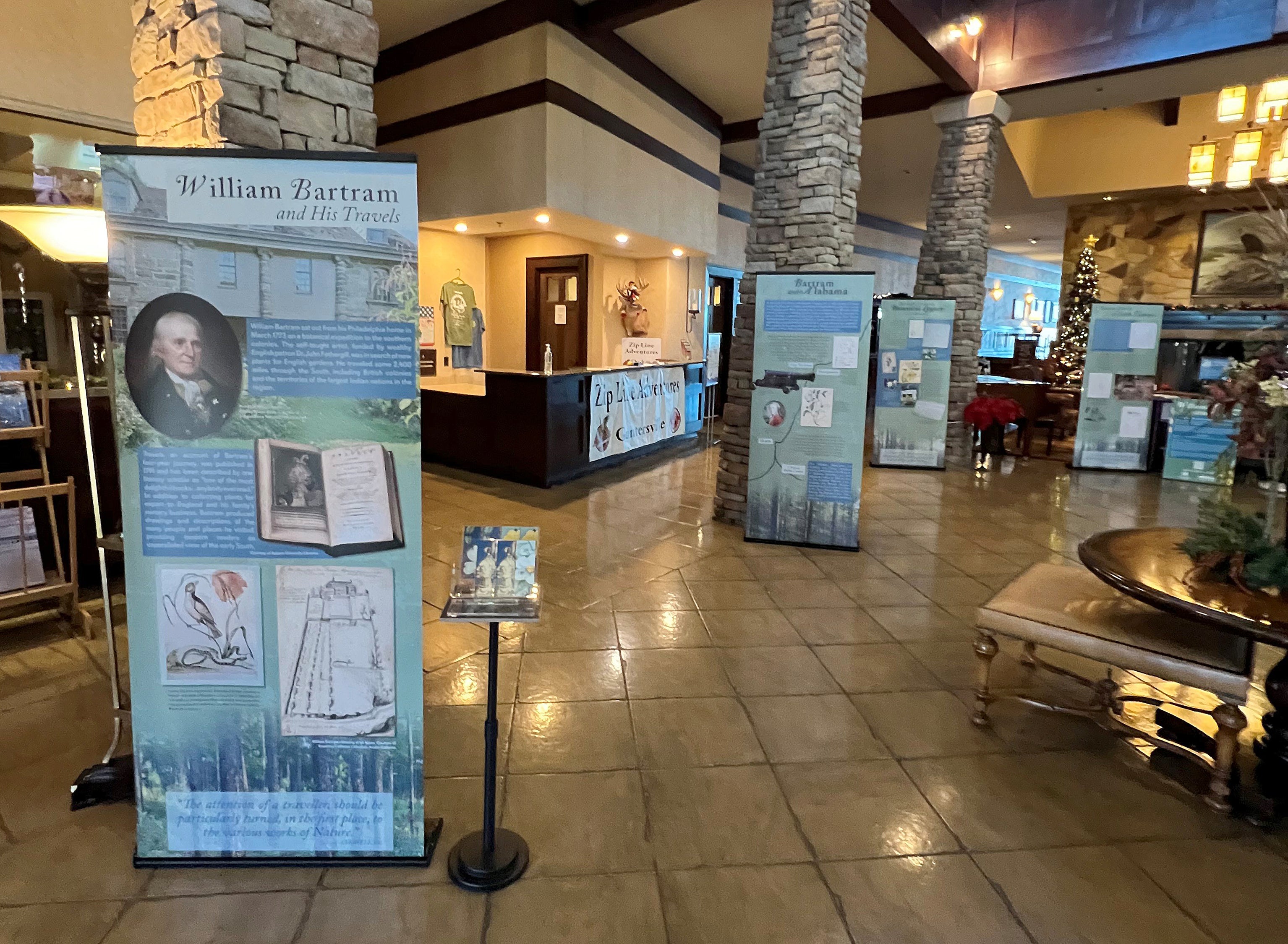
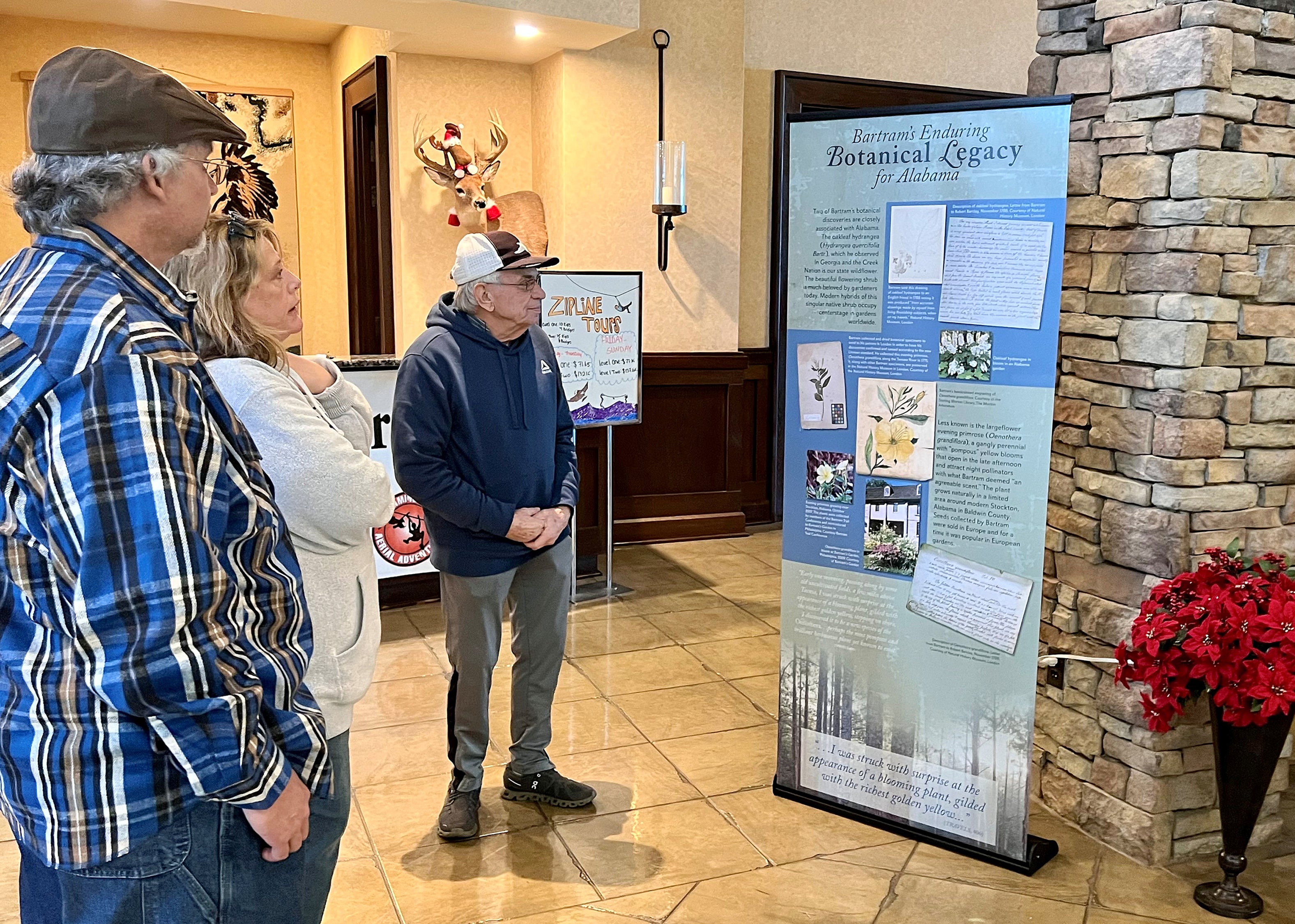
To commemorate that period of discovery and the vast contributions of this early adventurer, the Alabama Department of Conservation and Natural Resources’ State Parks Division is teaming up with Auburn University to highlight Bartram’s travels through Alabama with a traveling display that will be showcased at 12 Alabama State Parks, starting at Lake Guntersville State Park, where the exhibit is currently on display until February 1, 2026.
“Alabama State Parks are living classrooms,” said Alabama State Parks’ Chief Naturalist Renee Raney. “This has been our theme over the past few years as we increase our education outreach and bring more field trips and K-12 teachers into our parks.
“Bartram’s story belongs in the landscape that shapes those discoveries, and I believe our public lands are those landscapes. Hosting this exhibit allows guests to encounter Bartram, not as some distant, historic figure, but as a fellow explorer or naturalist to walk many of our rivers, forests and ridges. I really think our parks provide the perfect settings to connect observations from more than 250 years ago to the living ecosystems you can experience in our state parks today."
Raney said Dr. Mark Wilson invited Alabama State Parks to host “William Bartram and Alabama.” Raney and her team then developed a program to enhance the exhibit at State Parks. In addition to Alabama, Bartram’s travels included North and South Carolina, Georgia and Florida.
“Bartram’s work not only helped lay the foundation for the study of natural history in America, his observations in 1775 as he traversed Alabama inspired the very roots of our own interpretive program and the mission of our state park naturalist team,” Raney said. “As we approach the 250th birthday of our nation in 2026, I can’t imagine a better way to celebrate our country’s natural history and Alabama’s Year of Trails than by sharing this remarkable exhibit and its companion program, ‘In the Footsteps of Bartram: Discovering Alabama’s Natural Heritage,’ with visitors across our state parks.
“Bartram’s legacy of curiosity and wonder, whether he was ‘paddling through innumerable millions of mating mayflies, marveling at the gilded coat of mail of the yellow bream or observing the frog whose call resembles the barking of little dogs’ continues to inspire how we interpret and protect Alabama’s natural treasures today. We look forward to welcoming the public as the exhibit travels to 12 state parks from December 2025 through January 2027 and as our statewide education team leads special programs ranging from hiking to kayaking to nature journaling to Junior Ranger activities and beyond!”
Raney said Auburn’s Bartram exhibit will visit many cultural venues around the state, while the exhibit at Alabama State Parks will be in the midst of the landscapes that Bartram discovered and documented.
“The Parks-based exhibit will be history unfolding where it happened,” she said. “We’re inviting visitors to stand in the same ecological story that Bartram helped record.”