
CWD Cases Remain Localized in Northwest Alabama

cwd

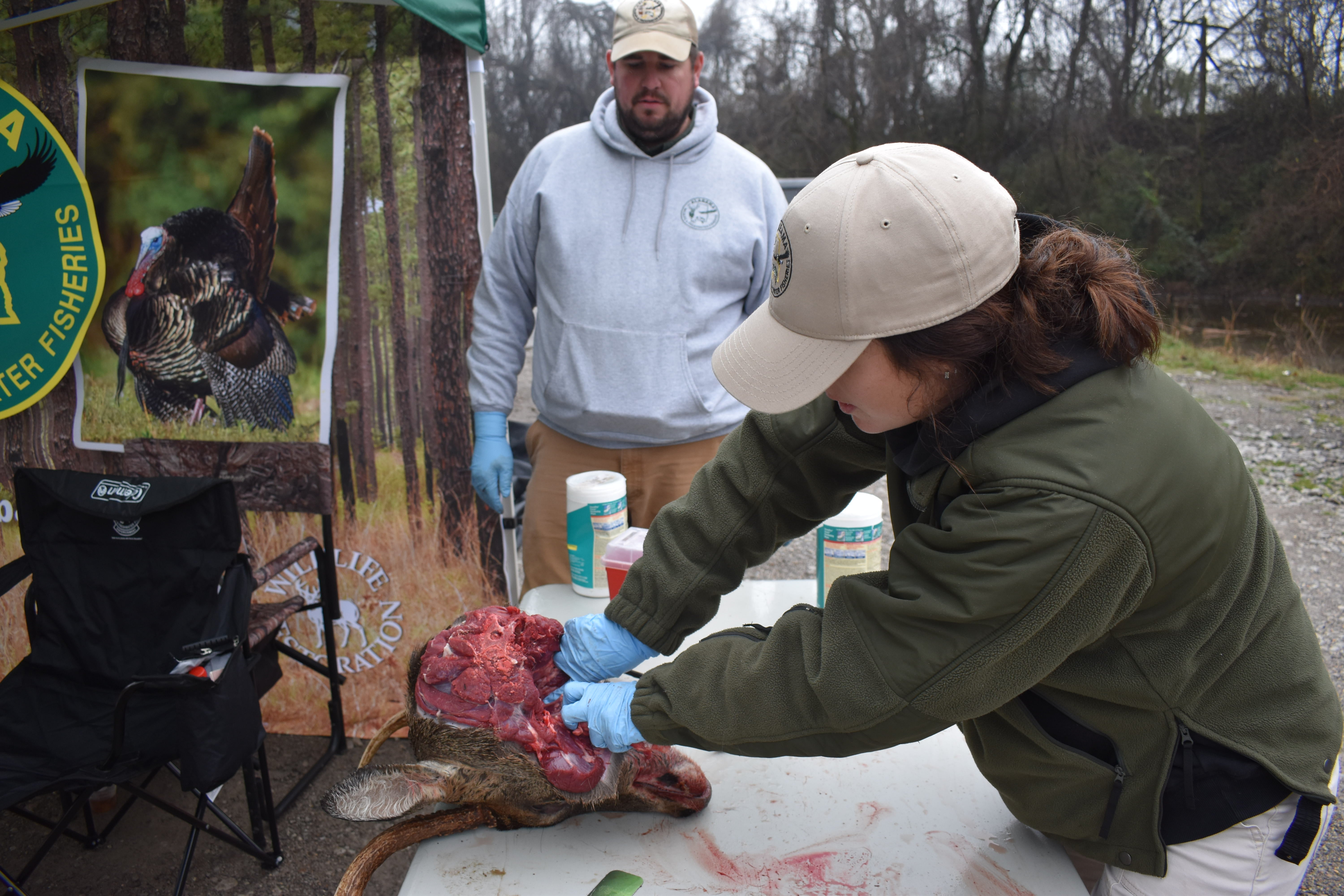
Olivia Sciandra retrieves lymph nodes during one of the mandatory weekends in the CWD Management Zone in northwest Alabama. WFF Photo

By DAVID RAINER, Alabama Department of Conservation and Natural Resources

The results of CWD (chronic wasting disease) monitoring from the Alabama Department of Conservation and Natural Resources’ (ADCNR) Wildlife and Freshwater Fisheries (WFF) Division include nine whitetail deer that tested positive in the 2025-2026 season. The good news is the disease remains localized in northwest Alabama with eight additional positives in Lauderdale County and one new in Colbert County.

Olivia Sciandra, WFF’s Wildlife Health Program Coordinator, said the recent 2025-2026 positives bring the total detections in the CWD Management Zone (CMZ) to 21 since the first detection in 2022. 

“The detections thus far we had this season have not changed our existing zone,” Sciandra said. “The one detected in Colbert County was in the far north of the county near the Natchez Trace, just south of the Tennessee River, north of the previous positive in Colbert County.”

In the 2025-2026 season, 2,886 deer were sampled with 937 samples coming from deer within the CMZ. During the gun deer season, WFF has mandatory sampling weekends for all deer harvested in the CMZ. In the 2025-2026 season, three mandatory weekends were held. WFF collected 573 samples from within the CMZ during those weekends.

Deer harvested in the CMZ cannot be transported outside the zone. Only completely deboned meat, cleaned skull plates with attached antlers with no visible brain or spinal cord tissue present, upper canine teeth with no root structure or other soft tissue present and finished taxidermy products or tanned hides can be transported outside the CMZ.

Sciandra thanked the hunters in the CMZ for contributing to the ongoing effort to help mitigate the spread risk of CWD.

“The hunters in Lauderdale, Colbert and Franklin counties are responsible hunters,” she said. “Most hunters are providing their harvested deer for testing, allowing us to get the distribution of where positives are. 

“I think most of our hunters, especially in Colbert and Lauderdale counties, are now used to the mandatory sampling in the CMZ, and having their harvested deer tested for CWD is becoming the status quo for hunters in these counties. I’ve had a lot of great conversations with hunters in Franklin County who are getting accustomed to getting their deer tested. In most cases, hunters want to know about the health of the deer they are harvesting.”

This past season, WFF added an incentive to hunters in the CMZ who bring their deer to have them sampled during the mandatory weekends. Hunters who submit the deer for sampling are eligible to receive a CWD Sampling Permit from ADCNR to harvest one additional antlered deer from within the CMZ for each sample submitted. CWD Sampling Permits are only available at WMA check stations and ADCNR mobile sampling locations. No more than two additional CWD Sampling Permits will be issued per hunter above the season bag limit, combined for the High-Risk and Buffer zones. CWD Sampling Permits are non-transferable.

“A lot of hunters are really enjoying the additional antlered deer permit that we were able to issue during the mandatory weekends,” Sciandra said. “One of the conditions of the permit was that the hunter would return the deer harvested under that permit for sampling. These permits benefit both hunters and our agency by providing additional harvest opportunities while incentivizing hunters to submit samples for CWD, which allows us to monitor the distribution of CWD in Alabama. We were able to issue 379 permits during our mandatory weekends this season.”
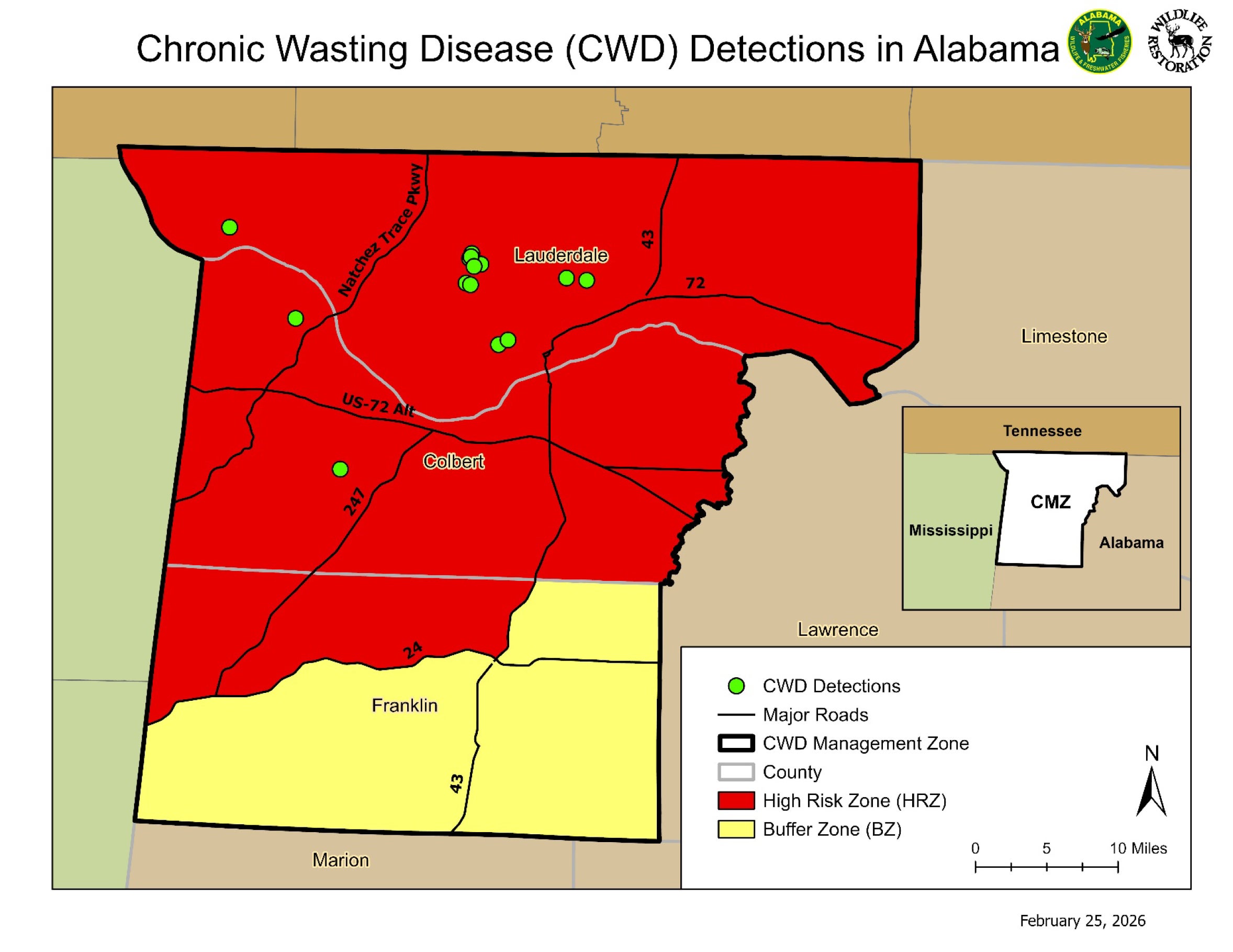
The updated CWD map shows the locations of deer that tested positive for CWD.

CWD is a transmissible spongiform encephalopathy found to affect deer and other cervids. It is believed to be caused by an infectious prion and has an extended incubation period. Diagnosis requires examination of brain and lymphatic tissue. Infected deer become emaciated, behave erratically and eventually die. Active surveillance for CWD in Alabama was initiated in the 2002-2003 hunting season following the confirmation of CWD in Wisconsin in early 2002. To date, WFF has tested a total of 27,488 deer.

The CMZ, which was established after WFF’s first detection of CWD, includes all of Lauderdale, Colbert, and Franklin counties. Within the CMZ, the High-Risk Zone (HRZ) includes all of Lauderdale and Colbert counties and a portion of Franklin County. The HRZ portion of Franklin County extends north of State Highway 24 from the Alabama/Mississippi state line east to U.S. Highway 43. The remainder of Franklin County south of State Highway 24 and east of U.S. Highway 43 has been designated as a Buffer Zone within the CMZ. 

CWD was detected in the bordering states of Mississippi and Tennessee in 2018. Alabama’s first positive was confirmed in January 2022, in Lauderdale County. Currently, the other surrounding states of Florida and Georgia have positive CWD cases. More than 35 states and four Canadian provinces also have confirmed cases of CWD.

Any member of the cervid family, including white-tailed deer, harvested out of state must be properly prepared before it can be legally brought into Alabama. Parts that may be legally imported include completely deboned meat, cleaned skull plates with attached antlers with no visible brain or spinal cord tissue present, upper canine teeth with no root structure or other soft tissue present and finished taxidermy products or tanned hides. 

Some of the deer that have been found positive for CWD looked perfectly healthy. Most of the CWD-positive deer have been hunter-harvested deer with no outward signs of CWD. When infected animals start showing symptoms, it can be just abnormal behavior. They can have a drooping, sick posture. Other symptoms include trouble with balance, excessive salivation or the loss of weight.

“In Alabama, we have collected 2,886 samples total this year and will continue to collect samples during this current sampling season through the end of June,” Sciandra said. “We anticipate getting at least a couple of hundred more statewide through road kills or sick deer reports.”

The sampling procedure includes removing lymph nodes from the base of the deer’s head that are sent to Auburn to the Alabama Department of Agriculture and Industry’s Thompson-Bishop-Sparks State Diagnostic Laboratory. It is a U.S. Department of Agriculture National Animal Health Laboratory Network-approved facility to test for CWD by using enzyme-linked immunosorbent assay (ELISA) for possible positive and immunohistochemistry (IHC) to confirm positives.

“We used to have to send our positive samples to Iowa for confirmation testing,” Sciandra said. “Typically, when a positive sample is detected, an independent ELISA test is re-run and an additional IHC test is conducted to confirm the sample as positive for CWD. This past year, the lab at Auburn was approved to do the IHC confirmation testing. That way, we’re able to get our CWD positive results back to hunters faster. In most cases, it’s a week to two weeks, at most four weeks.”

Hunters statewide can utilize self-service locations with freezers to drop off the heads from harvested deer for CWD testing. Those heads with a portion of the neck attached will be picked up by WFF personnel to be tested. Visit www.outdooralabama.com/cwd-chronic-wasting-disease/cwd-sampling for a map of freezer locations. Hunters who drop off deer heads are required to fill out tags that include contact information and location where the deer was harvested. A tear-off tag has an identification number that the hunter should retain.

“Outside of our hunting public, we’re really appreciative of the cases where people reported sick or strange-acting deer to us,” Sciandra said. “Most Alabamians enjoy watching wildlife, and when they see something odd going on, they can contact our agency. Because of that, we’ve been able to get additional samples from deer. One that was found in Lauderdale County was a sick, strange-acting deer that was reported before the deer season started. That one ended up being CWD positive.”

Anyone who sees a sick or strange-acting deer is asked to contact the local WFF district office or go online at www.outdooralabama.com/CWD-Info and click on the link Report Sick Deer.

###

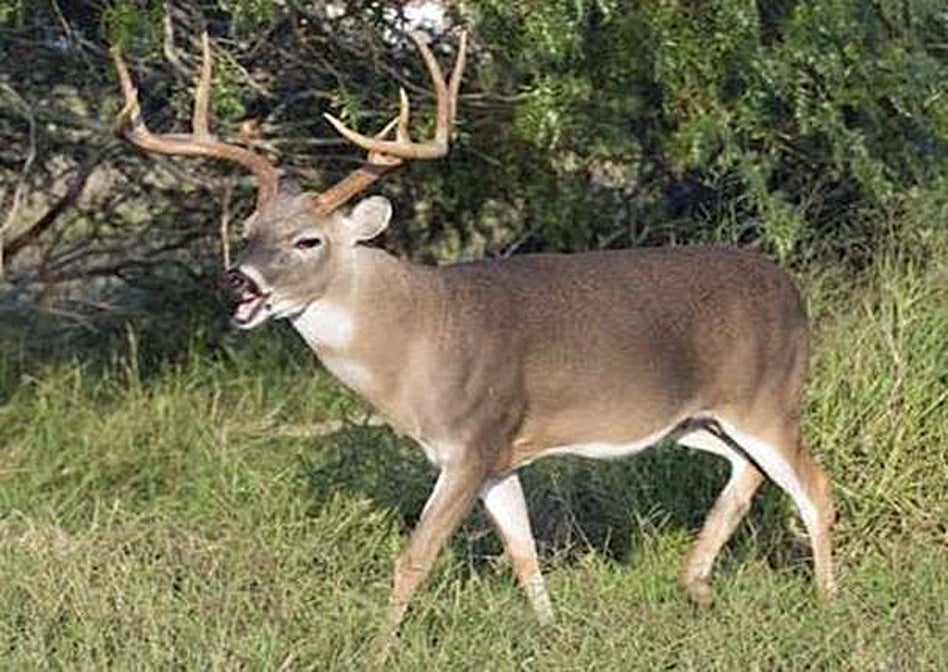
Although this deer appears perfectly healthy, it later tested positive for CWD.

Written by

David Rainer
Outdoor Writer
Back To News