
Snapper Season Opens Next Week; AL Creel Certified

red

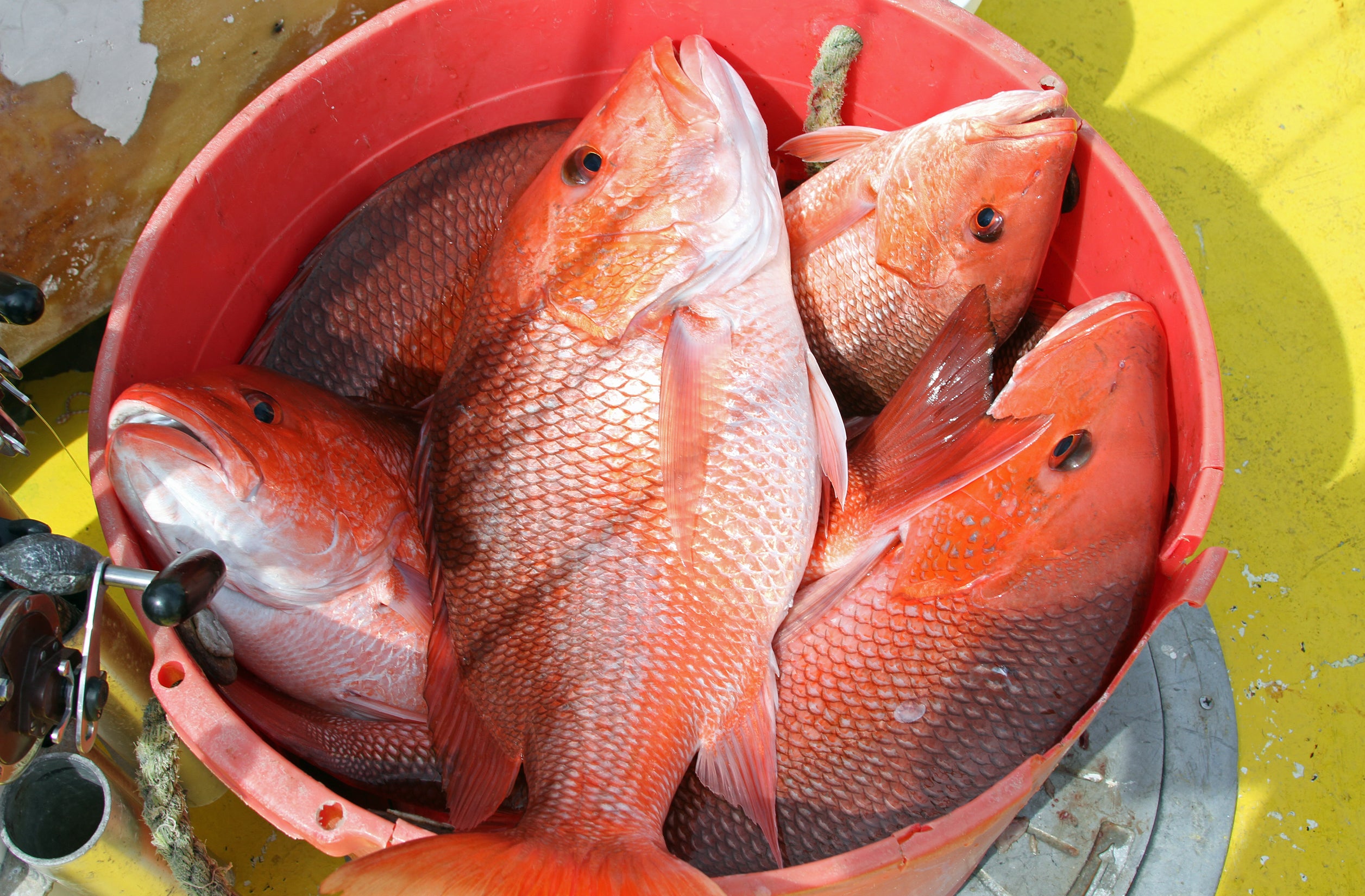
The red snapper season for private recreational anglers opens seven days a week starting May 22. Photo by David Rainer

By DAVID RAINER, Alabama Department of Conservation and Natural Resources

Anglers who fish in Alabama waters will gain more access to the state’s iconic reef fish, the American red snapper, starting the Friday before Memorial Day. Instead of incorporating weekend openings for part of the red snapper season, the 2026 season for private recreation anglers and state-licensed charter boats will be open seven days a week, starting May 22. 

The season will remain open until the NOAA Fisheries allocation of 664,552 pounds is projected to be met or December 31, 2026, whichever comes first. 

“Under state management we have the ability to adapt our red snapper season to meet the needs of anglers who fish in Alabama,” said Chris Blankenship, Commissioner of the Alabama Department of Conservation and Natural Resources (ADCNR). “With the season open 7 days a week, it will give our private anglers and state licensed charter boats more flexibility when planning their fishing trips so they can fish when the weather and sea conditions are favorable. We are excited to provide more opportunities to catch red snapper this year and anticipate another successful season.”

Charter boats that are federally permitted are regulated by NOAA Fisheries and follow federal guidelines. The season for federally permitted for-hire reef fish vessels will open at 12:01 a.m., local time, on June 1, 2026, and will close at 12:01 a.m., local time, October 26, 2026.

Kevin Anson, ADCNR’s Marine Resources Division (MRD) Director, said the estimated harvest for private recreational anglers and state-licensed charter boats was 623,029 pounds of red snapper in 2025, about 40,000 pounds below the season allocation. MRD monitors the reef fish harvest through Snapper Check, a mandatory reporting system for red snapper, greater amberjack and gray triggerfish. 

The University of South Alabama (USA) will conduct the phone survey for the first time this year. Select anglers started receiving the calls from USA in January 2026. Anglers selected to participate in the phone survey will see the call listed as coming from AL FISH SURVEY. Anglers receiving the AL Creel survey by email will see the “University of South Alabama” in the from field of the email.

During the 2025 red snapper season, MRD projected the allocation would not be met and opened the season seven days a week September 1 through the end of 2025. 

“That was good in respect that we tried to give anglers as much opportunity without changing the size limit or bag limit by opening up to seven days a week so we could try to reach our quota,” Anson said. “We had a good run near the end of the year when we had good weather. All in all, I felt like it was a good season.”

Since state management of red snapper season went into effect on a temporary basis in 2018 (permanent in 2020), MRD has been able to provide anglers with much improved access to the fish. Under federal management, the red snapper season was as short as only three days, which prompted a rush for anglers to get on the water no matter the weather or sea conditions.

“Every year that we have been operating under state management and moved away from the federal management and the very short federal seasons, the derby mentality appears to have slowly disappeared and faded from people’s memories,” Anson said. “Now, when snapper season opens, I think most people think it will be open as long as most people would like it to be open. For snapper season to be open the time of year they like to go fishing, when it’s warm and the winds aren’t so bad, I believe a lot of anglers are happy with state management and how the seasons have been managed here lately.”

dockside

Marine Resources employees conduct a dockside survey as part of the AL Creel program. ADCNR photo.

Anson said about the only complaint he has received is about the size of red snapper caught.

“The management path that has been chosen is one to give access to the fish with not as much regard to the size of fish harvested,” he said. “With multiple years of providing folks with as much opportunity to catch fish that has resulted in an average size of fish that is lower than what it was when we transitioned from federal management. Under federal management, the fish were much larger but at a cost of the number of days to fish. The very short seasons curtailed a lot of harvest. Lot of people were high grading (keeping only the large fish) at that time, which artificially inflated the size of the fish that were coming to the dock.” 

Anson said a federal stock assessment is due to be released by the end of 2026, and he has no indication of what that assessment may reveal.

“Depending on the results of that assessment, there may be some changes for 2027,” he said. “They have been very tight-lipped about any preliminary results.”

MRD also utilizes USA’s Stokes School of Marine and Environmental Sciences to monitor the red snapper off the Alabama coast. 

“Since 2011, we have funded a survey with (USA’s) Dr. Sean Powers, who conducts the survey independently from us,” Anson said. " He uses his data to come up with an annual estimate of red snapper abundance. We have not received the 2025 data yet, but his research indicated the fish were a little smaller in 2024 compared to 3 to 4 years earlier. The smaller fish aligns with our dockside surveys, but his data also seems to show that there were more red snapper compared to earlier years.”

The daily bag limit will be two red snapper per person per day with a minimum size limit of 16 inches total length.

Anglers 16 years of age and older must have an Alabama saltwater fishing license (resident or non-resident, annual or trip), and any Alabama resident 65 or older or a lifetime saltwater license holder must have a current saltwater angler registration. The saltwater angler registration is free and available at www.outdooralabama.com/saltwater-fishing/saltwater-angler-registration.

All anglers 16 years of age and older who possess Gulf reef fish, including red snapper, must have an Alabama Gulf Reef Fish Endorsement, available at www.outdooralabama.com/saltwater-fishing/saltwater-reef-fish-endorsement.

Anglers under the age of 16 are not required to be licensed, possess an Alabama Gulf Reef Fish Endorsement or have saltwater angler registration, but their catch must be included in a landing report.

In addition to Snapper Check, MRD’s AL Creel recreational fishing survey was recently approved and certified by NOAA Fisheries after an extensive review period.

“We are excited that AL Creel has received federal certification from NOAA Fisheries,” said Chris Blankenship, ADCNR Commissioner. “Transitioning to the AL Creel survey will allow our fishery managers to provide more accurate recreational fishing estimates that will aid in the development of timely management strategies specific to Alabama. This will benefit both our anglers and Alabama’s marine resources.”

The new program has been conducted concurrently with the NOAA Fisheries Access Point Angler Intercept Survey (APAIS). After an extensive review, AL Creel recently received federal certification. Beginning in 2027, MRD plans to continue AL Creel, and NOAA Fisheries will discontinue funding of APAIS. 

“AL Creel was developed to investigate the potential for more timely and accurate estimates of catch and harvest data compared to the federal fishing survey managed by NOAA Fisheries,” Anson said. “As the AL Creel and APAIS surveys will be conducted concurrently again in 2026, our fisheries staff will continue a higher than normal presence at access points to collect the needed data. We appreciate our anglers’ cooperation and patience during this comparison phase.”

The AL Creel survey conducts dockside interviews of recreational saltwater anglers as part of the survey process. Weekly phone or email surveys are gathered from private anglers and state for-hire licensed vessel captains/owners (not federally permitted vessel captains/owners) to assess their fishing activities from the previous week. The catch and fishing effort information is combined to determine weekly recreational catch estimates for many managed finfish.

###


creel

Written by

David Rainer
Outdoor Writer
Back To News