By DAVID RAINER, Alabama Department of Conservation and Natural Resources
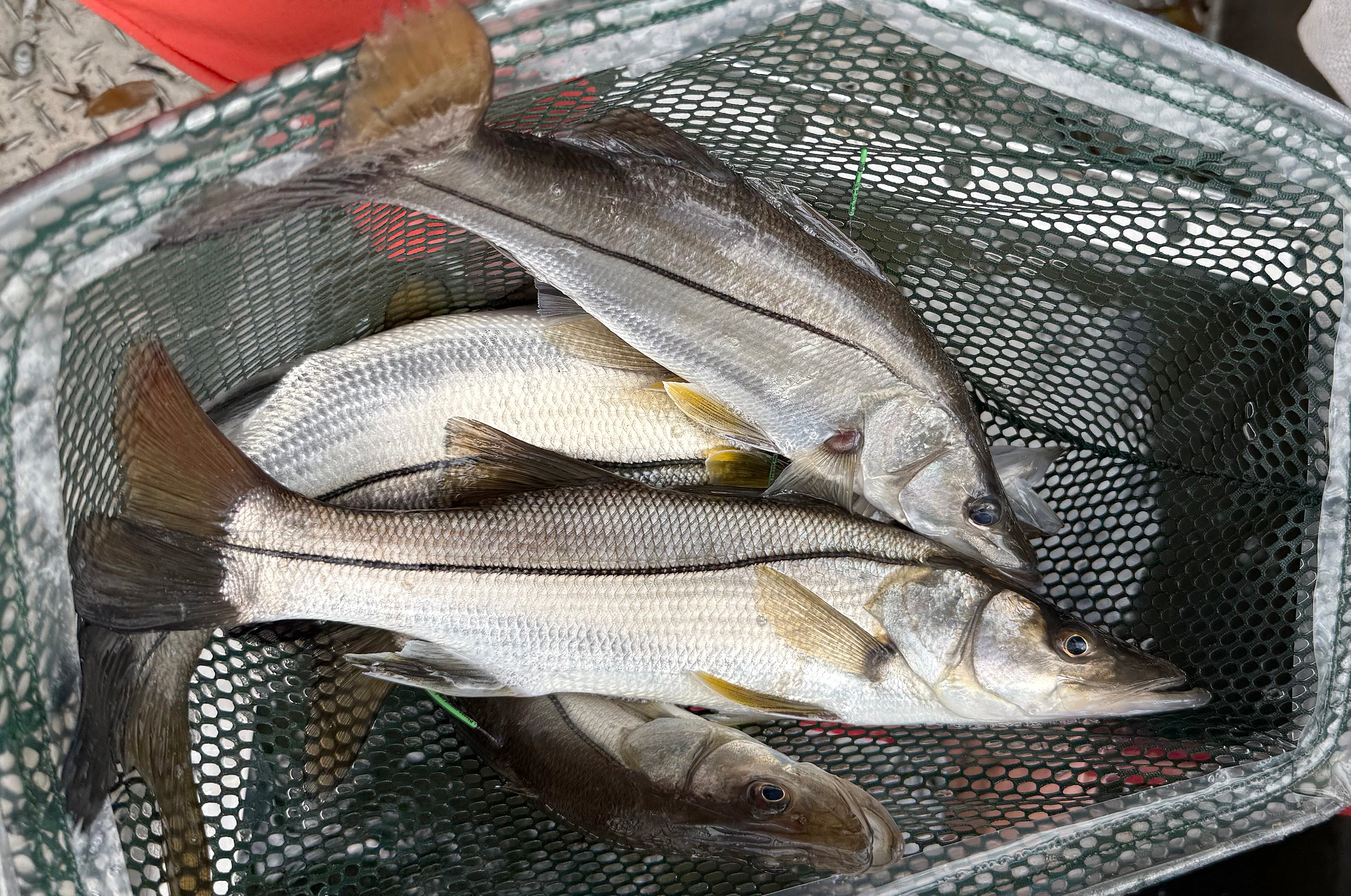
In the past, a fish with common in its name has been practically non-existent in Alabama’s coastal waters. However, anglers are increasingly encountering the common snook along Alabama’s beautiful coast, quite a distance from its traditional range in south Florida.
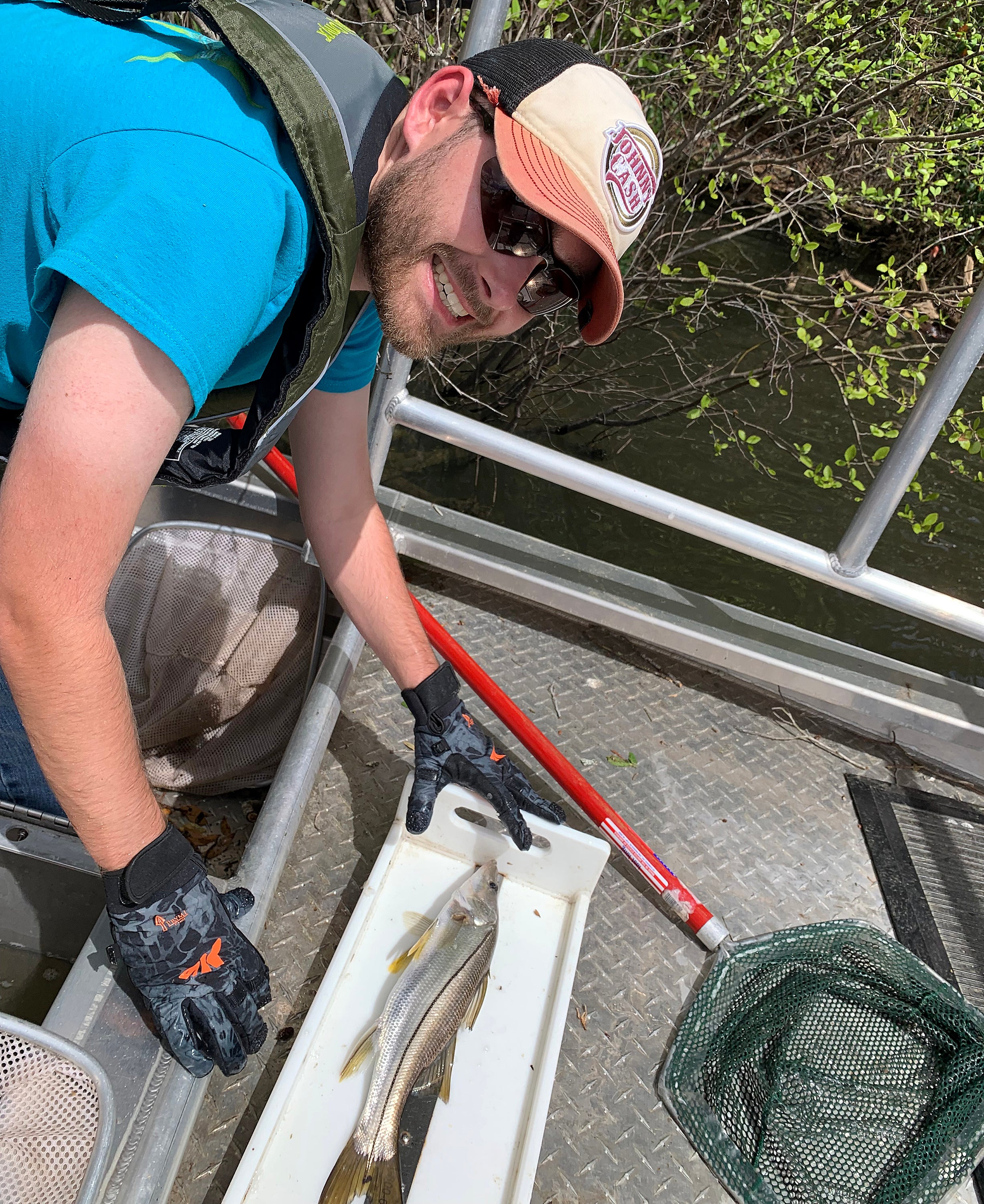
As Alabama anglers started hooking these fish with a large mouth and long lateral line, Dr. Charlie Martin of the University of South Alabama (USA) and the Dauphin Island Sea Lab (DISL) took interest and wanted to document the fish’s relative abundance in Alabama waters.
“The historic range was just north of Tampa to the south on the Gulf side,” said Martin, a north Alabama native. “I started on the staff at the University of Florida in 2016 working around Cedar Key. We started catching snook there, big ones, and I wrote a paper on that. I got my Ph.D. at the University of South Alabama and Dr. (Sean) Powers recruited me to come back to Alabama.
“Then all of a sudden, there’s all these reports of snook showing up in coastal Alabama. I followed the snook all the way to the northern Gulf. We’ve had reports in the Florida Panhandle, and we’ve had some reports from Mississippi. Of course, if you catch them at Dauphin Island, it’s not that far to Mississippi.”
Martin said anglers have reported more than 150 snook hooked in Alabama waters, which he thinks is a low estimate.
“That’s quite a bit, but that’s just what gets reported,” he said. “There’s likely way more that don’t get reported.
“There’s a lot of excitement around it, and a lot of the fishing guides are really excited.”
Kevin Anson, Director of the Alabama Department of Conservation and Natural Resources’ (ADCNR) Marine Resources Division (MRD), said it’s not that unusual for species that inhabit more tropical waters to find their way to Alabama.
“From time to time we have captured bonefish, considered more of a fish from tropical waters, and its occurrence usually coincided with periods of time when we’ve had warm winters for two or three winters in a row,” Anson said. “African pompano have been caught more frequently than in the past. We have some increase in species not routinely caught off Alabama in the most recent time period of 50 or so years.
“We will certainly be interested in any information on snook that Charlie and his staff and students are gathering. We just don’t have a lot of data. The state of Florida has done a lot of research, and that’s where we’ve gone to try to understand its biology and life cycle. That is what we’ve been using so far, but our habitat is significantly different than the habitat where most of the research has been conducted. There may be differences in age and growth and reproduction in the northern Gulf. It will take a while to build up a good body of that research, but we’re appreciative of any research they (USA) can do for that species."
Adam Rhodes of Elberta currently holds the state record for snook at 13.7 pounds, caught in February this year. A 72.6-pound snook was caught earlier this year off the coast of Costa Rica.