
WFF Asks Public for Assistance with Wild Turkey Brood Survey

brood

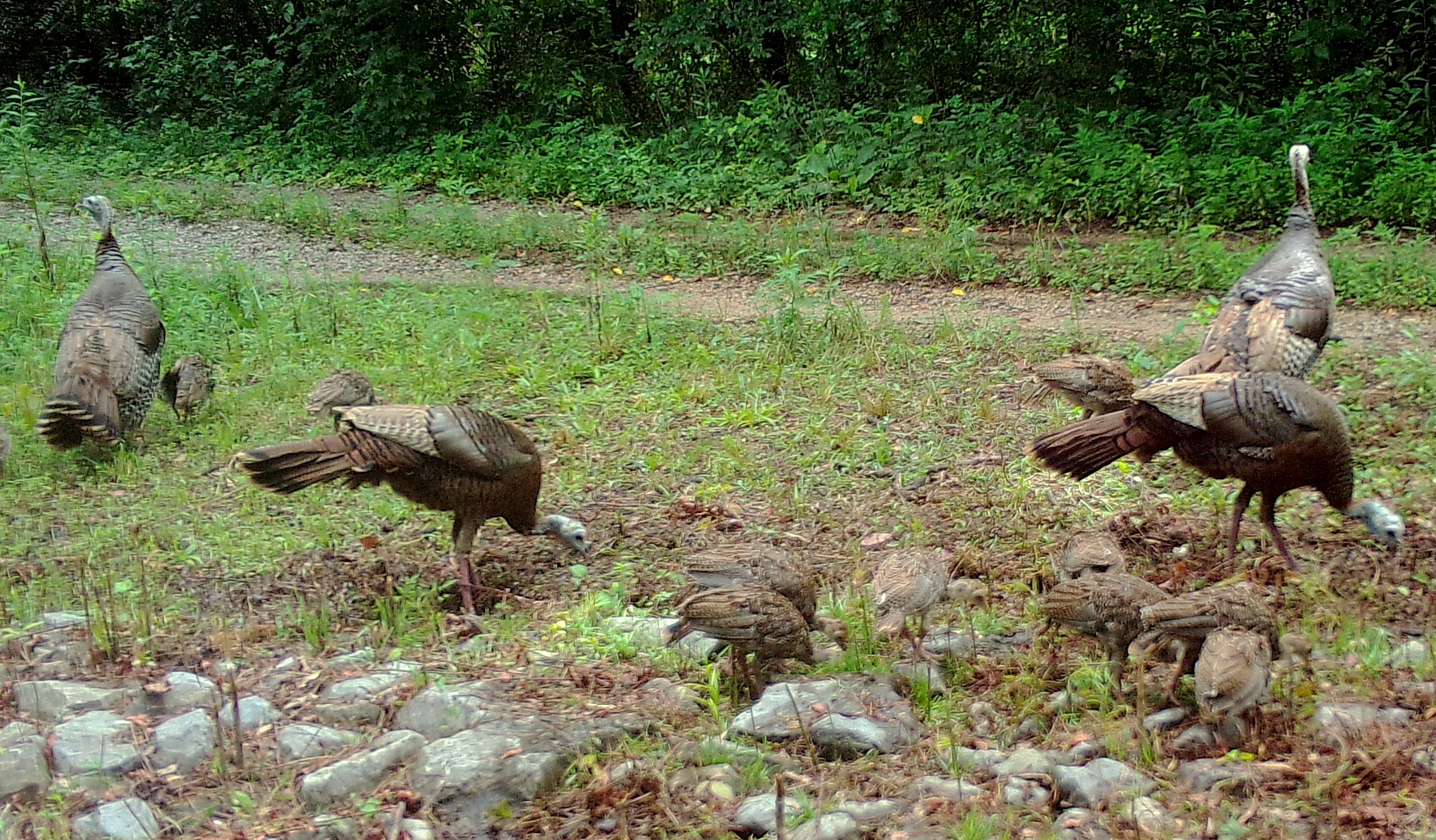
The key to a stable wild turkey population is the survival of enough poults to have at least a two-to-one poults to hen ratio. ADCNR photo

By DAVID RAINER, Alabama Department of Conservation and Natural Resources

For the first time, the Alabama Department of Conservation and Natural Resources’ (ADCNR) Wildlife and Freshwater Fisheries (WFF) Division is asking the public to participate in the annual wild turkey brood survey, which starts on June 1 and ends on August 31.

Caleb Blake, WFF’s Upland Game Bird Coordinator, said previously the survey participants have been from WFF staff and trusted partners. With the slow decline of turkey populations in the South, WFF is asking for assistance from private citizens to try and gather better data to understand what is affecting those populations.

“We have data back to 2010 from our staff surveys, and in 2019 we partnered with the Southeastern Association of Fish and Wildlife Agencies (SEAFWA) and the National Wild Turkey Federation (NWTF) Technical Committee with its standardized brood survey that is used all over the Southeastern states,” Blake said. “A lot of states have done the survey with staff only. Other states have included private citizens in the survey.

“We’ve been doing it in-house for years, but with the increased concern over the regional trends of wild turkey populations, we want to really increase our geographical coverage so we can better analyze and evaluate regional trends of turkey populations. Including the public will give us a much wider reach as far as sample size and coverage.”

To participate, private citizens can visit www.OutdoorAlabama.com/WildTurkeyBroodSurvey for details on how to report observations and the information WFF needs to track brood sightings. This includes information on submitting the observations online, through the Survey123 field app or by paper form. 

“The app is just so much easier,” Blake said. “In the past, we’ve always done a paper survey. People would have a clipboard in their trucks and jot down observations. At the end of the survey, they would take that paper document, go onto our website and enter the data.”

The data came from agency staff and trusted partners in the federal government and conservation organizations that have worked with WFF in the past.

“Now, if they have their mobile device, private citizens can pull up the survey, put in their observations, hit submit, and then they’re done,” Blake said. “Another reason we wanted to include private citizens is that between 93% and 95% of the land in Alabama is privately owned. In order to get the best coverage we can, we want to get the best input we can. If we’re going to have a region-wide recovery, it’s going to take private citizen participation.”

The brood survey essential data includes sightings of gobblers, hens with poults, hens without poults, poults, sighting with unknown identification, and size of the poults. Class 1 is for the youngest poults (6 inches tall or less), class 2 for poults around 10 inches tall, and class 3 for poults six to eight weeks old with an average height of 15 inches.

poult

This young turkey poult stays in hiding to avoid predators. Photo by Ricky Wood

Also important to the survey is the county and location to understand regional and geographical trends. In the app, a drop-down menu will allow participants to select their county and location type.

“Another thing is we will have real-time data coming in, and we will see if there are areas we need to put more emphasis on or if there are holes missing in the data,” Blake said. “That is another benefit of using the app. In the past, we wouldn’t get that data until after the survey.

“The sole reason for sharing the location is to analyze productivity by ecoregions. We provide a map of the ecoregions in the paper form, so participants can record the exact ecoregion of the observation. On the app, if you share the location of the observation, the ecoregion is automatically populated into the field.”

Turkey hunters, as a group, are hesitant to share too much information about their turkey world, but Blake said not to worry.

“We do not share any locations of observations with the public other than at a regional scale,” he said. “We give the final numbers by regions but not by specific locations.”

Blake said estimating populations is very difficult for Eastern wild turkeys.

“Determining population size is extremely difficult to do,” he said. “This brood survey, along with harvest and our Avid Turkey Hunter Survey, gives us good indices for overall population estimates and productivity.”

Blake said productivity is the key to slowing or even reversing the population decline.

“This data provides us with brood productivity,” he said. “We get an average ratio of poults per hen. The standard wisdom has always been that you want to keep a one hen to two poults ratio. That ratio is more indicative of a stable population. We’ve been seeing a slow downward trend in poults per hen below that one to two ratio, which is also why we wanted to expand our reach in our geographical range and coverage so we get more reliable data.

“That productivity index gives us a good idea of future hunting opportunities and helps to drive future seasons and bag limits. With that productivity index, we can kind of predict what the harvest might look like.”

For example, two years ago the Southeast enjoyed a decent hatch of poults with good survival rates. That turned into a very good hunting season.

“I think that is what we saw this year,” Blake said. “We saw record harvests across the Southeast region. Two years ago across the region, there was a pretty decent hatch and brood success. That means that two years down the road, you can expect to see more 2-year-old adult males on the landscape. It gives us a picture of what future harvest may look like.”

Blake said it’s too soon to evaluate the long-term outcomes of the increased harvest, but it does help wildlife managers evaluate the overall population.

“Talking to other states, some think it’s related to greater compliance with their game check system,” he said. “I just think there were more 2-year-old gobblers on the landscape being harvested. That data is very valuable to us, which is why we require people to Game Check their birds.

“And it may be there are more hunters on the landscape. Turkey hunting is much more popular. That has led to higher harvest, which is why it’s very important to have good reliable data to analyze.”

###

aging

This chart gives an indication of age according to size.

Written by

David Rainer
Outdoor Writer
Back To News