
Fort Morgan Trail Adds to Gulf State Park Adventure List

trail

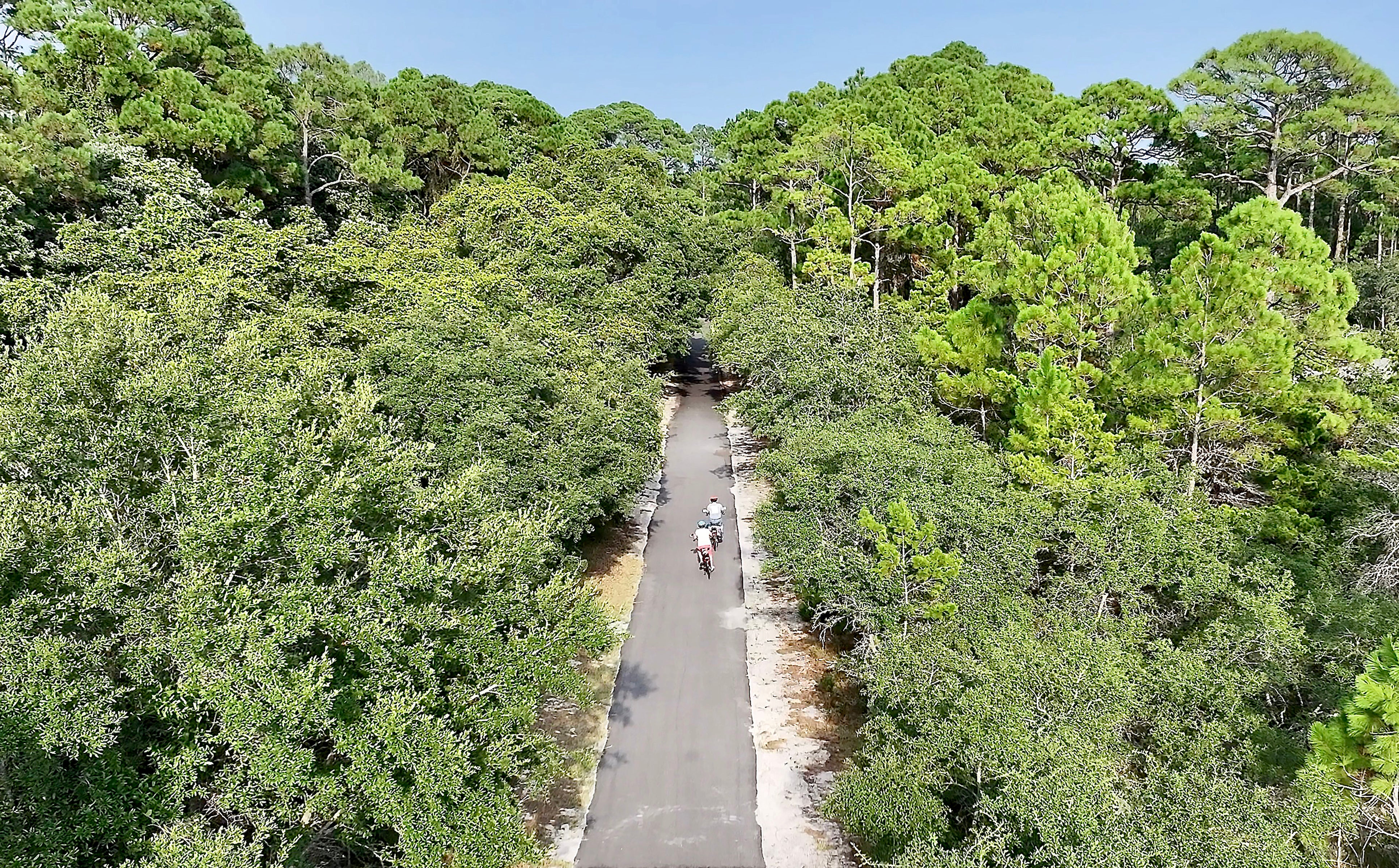
A pair of cyclists take advantage of the new Fort Morgan Trail that connects to Gulf State Park. Photo by Josh Bean

By DAVID RAINER, Alabama Department of Conservation and Natural Resources

Spending time in nature has been proven again and again to provide benefits to physical, mental and spiritual health, which is why projects like the Fort Morgan Trail extension are so important to the Alabama Department of Conservation and Natural Resources (ADCNR).

The 4.4-mile extension along Highway 180 (Fort Morgan Road) connects the trail along the scenic peninsula to Gulf State Park, Alabama’s second largest state park at 6,150 acres with more than 2 miles of sugar white beaches. 

“This is another great asset for Baldwin County, our great state and the millions of visitors who come to enjoy our beautiful Gulf Coast,” ADCNR Commissioner Chris Blankenship said. “More and more, people are trying to connect with nature. Extending the Fort Morgan Trail gives residents and visitors more opportunities to walk, bike and enjoy the beauty of our wonderful coastal environment. Projects like this create new ways for people to experience the outdoors, support tourism and enhance the quality of life for the communities all across the state. I’m proud to support this project and excited to see this important connection completed.”

A recent ribbon-cutting and ceremonial grand opening of the extension was attended by community leaders, elected officials, Executive Director of the Gulf Coast Ecosystem Restoration Council Mary Walker, Alabama State Parks staff and the public. The extension brings the Fort Morgan Trail to a total of about 10.5 miles along Fort Morgan Road.

Alabama State Senator Chris Elliott agreed with Commissioner Blankenship that extending the Fort Morgan Trail is a win for residents and visitors alike.

“Trails like this draw tourists to our coast, support local businesses and give our families a safe, beautiful place to be outside together,” Senator Elliott said. “It’s always good to offer more outdoor recreational facilities along our scenic Gulf Coast.”

The new 4.4-mile section starts at Plantation Boulevard and extends westward to a new trailhead near Fort Morgan Pizza. The trail, which can be traveled on foot or by bicycle, is paved and 10 feet wide along its entire length, providing a safe and accessible route for users.

To preserve critical coastal wetland areas, the extension includes 12 bridges that allow travelers to experience the ecosystem without any human intrusion. At the new trailhead, a new bathhouse with four private, family-style suites will provide trail users with comfort and privacy.

The Fort Morgan Trail also connects with Gulf State Park’s Hugh S. Branyon Backcountry Trail system, giving visitors access to a larger network of approximately 28 miles of paved trails throughout the park and connecting to Orange Beach.

The $5.6 million project was funded by the federal RESTORE Act, which uses civil and administrative penalties paid under the Clean Water Act by companies responsible for the 2010 Deepwater Horizon oil spill. Under the Act, the funding supports programs, projects and activities designed to restore and protect the environment and economy of the Gulf Coast region.

Alabama State Parks Director Matthew Capps said the Fort Morgan Trail is a continuation of the effort to get people outdoors, not only on the coast but statewide.

“We're thrilled to see the Fort Morgan Trail extended because trails like this one allow people to connect to nature and give everyone another reason to spend time on our gorgeous Gulf Coast,” Capps said. “We're continuing to invest in places that give families and visitors opportunities to explore and experience what makes Alabama special. This trail extension is another example of how we're working to create a first-class experience for everyone who visits Alabama State Parks.”

Commish

With the new trailhead bathhouse in the background, Conservation Commissioner Chris Blankenship explains why providing public access to Alabama's natural wonders is so important. Photo by Josh Bean

Commissioner Blankenship said the Fort Morgan Trail extension is a portion of a significant investment of more than $350 million in Alabama State Parks during this administration to improve facilities, expand recreational opportunities and create memorable experiences for visitors across the state. Recent projects include the new executive RV Resort at Gulf State Park, construction of a new access road at Rickwood Caverns State Park, and the total renovation and re-opening of Lake Lurleen State Park. Construction on a new 32-room, bluff-side lodge at Cheaha State Park, Alabama’s highest point at 2,407 feet in elevation, is expected to be completed later this year.

In addition to the executive RV campground’s 104 modern campsites, Gulf State Park offers 496 modern campsites in the traditional campground, 35 cabins/cottages (31 of which are on the 529-acre Lake Shelby) and a 350-room hotel, The Lodge at Gulf State Park. The park also has a state-of-the-art Learning Campus, a nature center, and a 1,540-foot fishing pier, plus picnic areas, group pavilions, an extensive trails system and nature programs.  The park has numerous dining options as well, with The Lodge featuring three restaurants on-site – Foodcraft, Perch (fine dining), and The Dragonfly Pool Bar and Grill – along with Barnacle Bill’s Pool Bar and Roasted Oak Coffee & Wine Bar; Woodside restaurant is a sixth dining option within the park, located near the park headquarters.

Capps said the variety of trails at Gulf State Park provide a wealth of choices for an outing, from short walks or bike rides to an all-day adventures.

“When you visit Gulf State Park, you have access to all these trails that go from Orange Beach to halfway down the Fort Morgan Peninsula,” Capps said. “We now have almost 40 miles of trails. That’s a big story. It’s something that strengthens the reason you choose Gulf State Park. You have the trails, the beaches and other amenities. Then you have all the shopping. You have got a little bit of everything.”

Capps pointed out that the Hugh Branyon trail has been named the top recreational trail in USA Today 10Best Readers' Choice Awards three years in a row.

“We’re making investments to build more access, more pathways to make memories with your friends and family,” he said. “You never know what you’re going to see when you’re in the park - all sorts of wildlife, plants and flowers native to the coast. You travel over marshes, bogs and beaches. You get to experience all types of habitats and ecosystems when you hike or bike around Gulf State Park.”

Commissioner Blankenship also pointed out the extensive Deepwater Horizon (DWH) Restoration work that continues on the Ft Morgan Peninsula with 11 restoration projects worth more than $88 million. That work includes the preservation of 99 acres at historic Pilot Town, 836 acres on Oyster Bay, 487 acres at the Navy Cove and Three Rivers section of the Bon Secour National Wildlife Refuge, new public access inside the Refuge, and the rebuilding of the Steve McMillan Fort Morgan Pier. ADCNR has also completed other significant land acquisitions, including Gulf Highlands in 2018 and at Beach Club West in 2024. In total these two properties encompass 192 acres with 2,700 feet of Gulf frontage.

“I would like to thank Dr. Amy Hunter and the DWH Restoration Section for all their diligent work on these projects,” Commissioner Blankenship said. “In total, more than 1,660 acres of coastal habitat have been protected on the Fort Morgan Peninsula. I am grateful that we all get to enjoy that for generations. I am pleased with the way we have been able to piece together the various oil spill funding streams with other sources of funding to create and protect something really special here in south Baldwin County.” 

###

FM

A majestic live oak towers over the new Fort Morgan Trail extension in Baldwin County. Photo by Josh Bean

Written by

David Rainer
Outdoor Writer
Back To News