
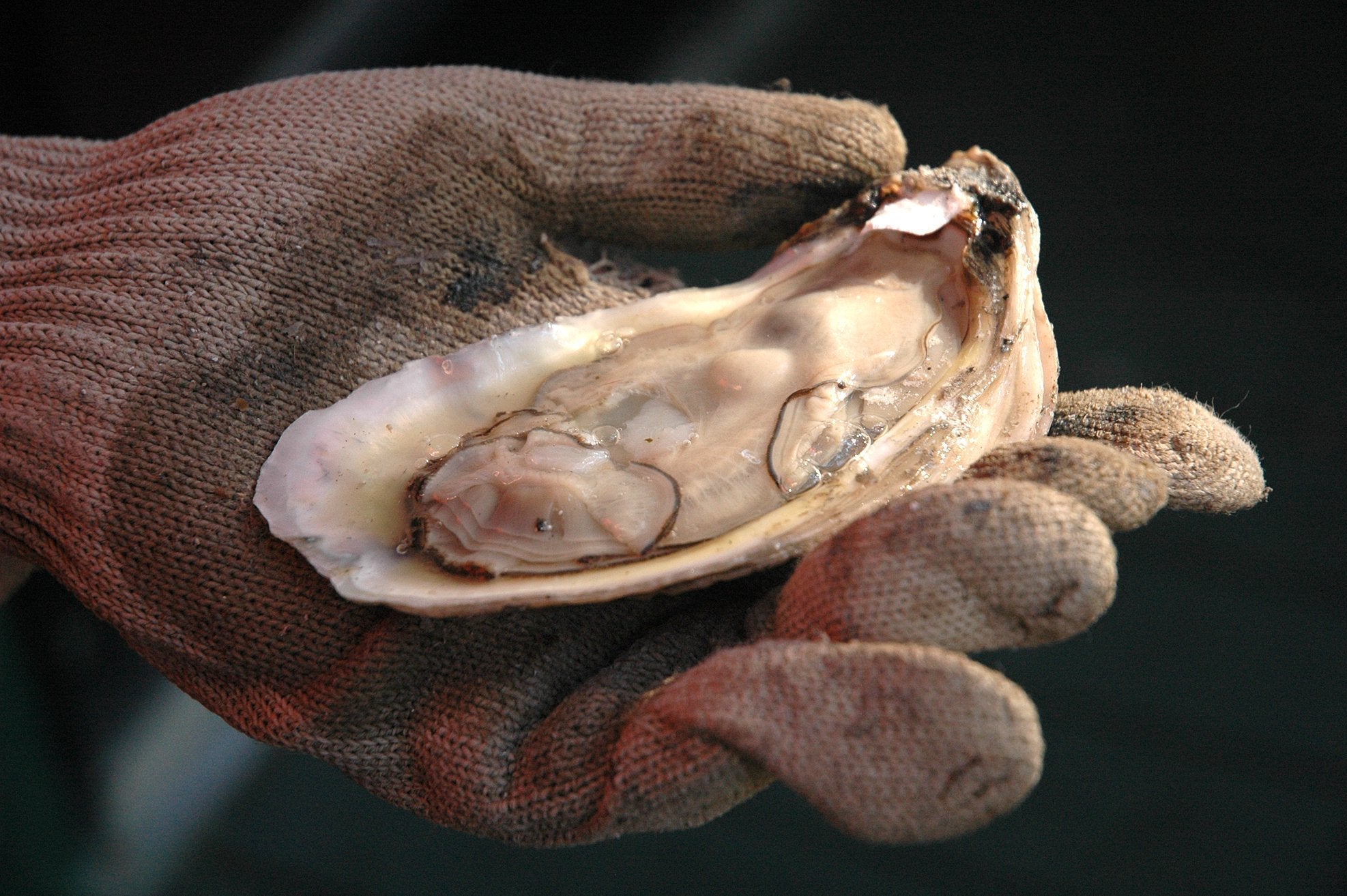
Pursuant to Section 9-12-28, Code of Alabama 1975 as stated by Rule 220-3-.02, the Marine Resources Division (MRD) of the Alabama Department of Conservation and Natural Resources (ADCNR) announces that all public water bottoms will close to the harvest of oysters at 2 p.m. on Wednesday, November 18, 2026.
Summary of Alabama's Oyster 2026 Harvest
Alabama’s public oyster reefs opened for harvest on November 2, 2026, and will close for the season at the end of the harvest day on Wednesday, November 18. The 2026 oyster season was open for 12 days compared to 58 days in 2024 and 54 days in 2025. This year, the commercial oyster harvest is anticipated to be less than 400 sacks compared to the nearly 25,000 sacks harvested in 2024 and 5,000 sacks harvested in 2025. Closure of the oyster reefs will help protect the remaining spawning population, which is critical to restoring Alabama’s oyster resources.
Prior to the season opening, oyster surveys were conducted by MRD Fisheries Section staff. Results of the surveys indicated the 2026 season would be limited due to low legal-size oyster density on oyster reefs in Heron Bay, Cedar Point West and Cedar Point East. This data continued the trend of generally decreasing oyster abundance. Oyster numbers have remained low in recent years due to adverse environmental conditions such as periods of time with waters of low or high salinity and low dissolved oxygen. These conditions negatively impact oyster spawning, survival and growth.
“The oyster surveys conducted this year indicated the number of harvestable oysters was less than estimates from surveys conducted in 2025,” said Kevin Anson, MRD Director. “The decrease in harvestable oysters continues a trend that has been observed in recent years. A decreasing trend in the abundance of very young and sub-adult oysters was also observed during the surveys this year. Oysters have been unable to rebound due to the poor environmental conditions that impact young oysters the most. It takes a minimum of 18 months for an oyster to reach harvestable size. An extended period of ideal water quality is needed before our oyster reefs can recover enough to provide the types of harvest numbers we were seeing in previous seasons.”
The MRD continues its partnership with the Alabama Department of Public Health, commercial oyster catchers, seafood dealers and other partners to protect and restore Alabama’s oyster resources.
Additionally, MRD staff, in partnership with researchers at Auburn University, continues to assess oyster larval settlement patterns and the seasonal dynamics of water quality within Mobile Bay and Mississippi Sound to determine the most optimal areas to restore Alabama’s oyster reefs. This work is funded through a $10 million award from the Natural Resources Damage Assessment (NRDA) Trustee Implementation Group with funds allocated from the Deepwater Horizon Oil Spill Settlement. ADCNR Commissioner Ben Stimpson, Jr. serves as the lead NRDA trustee for Alabama. The focus of this project is to restore and maintain Alabama’s oyster reefs for the benefit of generations to come.
ADCNR promotes wise stewardship, management, and enjoyment of Alabama’s natural resources through four divisions: Marine Resources, State Lands, State Parks, and Wildlife and Freshwater Fisheries. Learn more at www.outdooralabama.com.
###