
Safety Harness, Muzzle Discipline Keys to Hunter Safety

safety

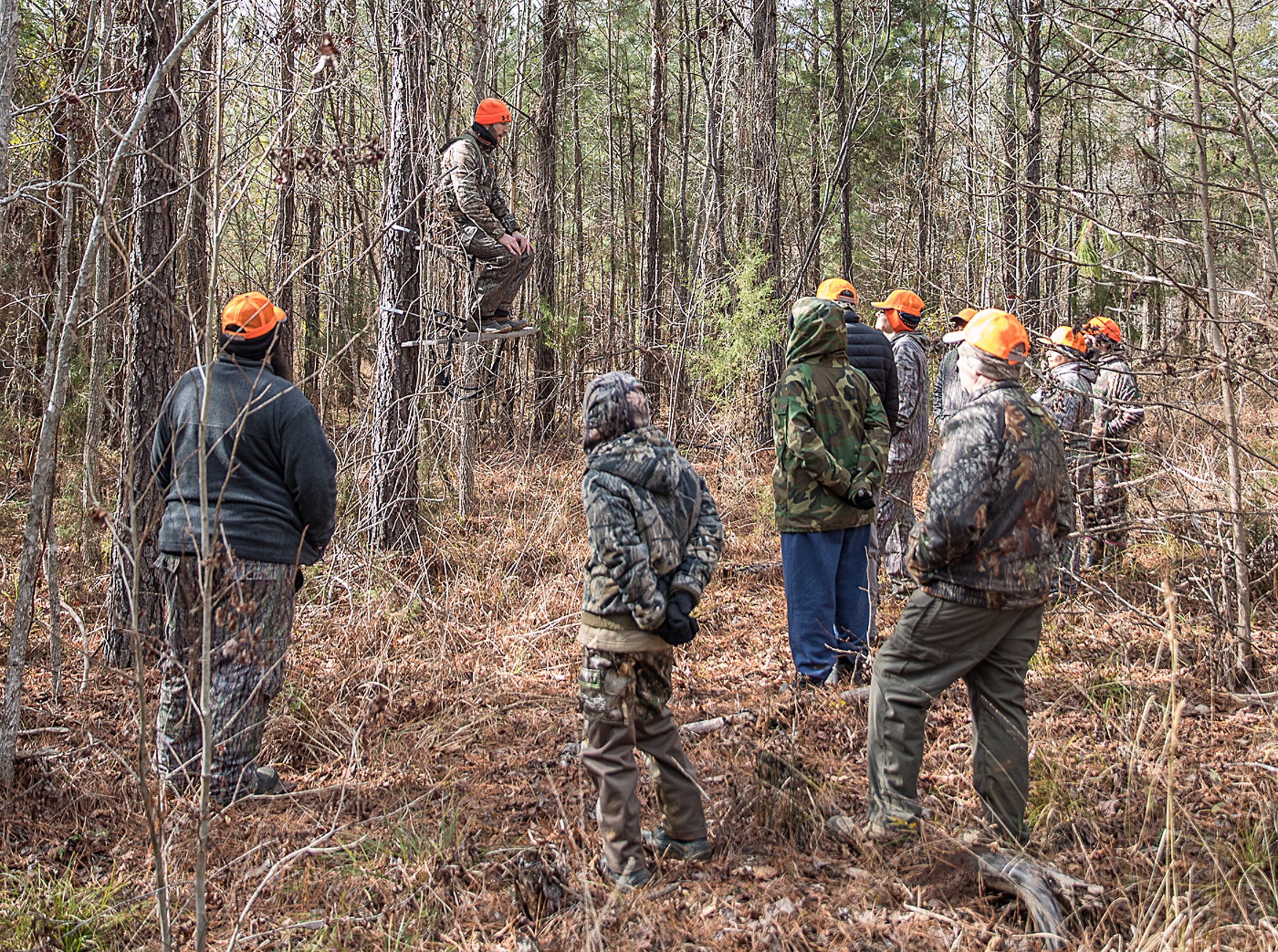
Justin Grider demonstrates how to use a climbing stand, including the crucial fall-arrest harness. Photo by Billy Pope

By DAVID RAINER, Alabama Department of Conservation and Natural Resources

For the majority of the state, the opening day of gun deer season is only a couple of weeks away, and Justin Grider and Katie Burks of the Alabama Department of Conservation and Natural Resources’ (ADCNR) Wildlife and Freshwater Fisheries (WFF) Division wants all hunters to focus on one thing – SAFETY.

Grider, WFF’s R3 (Recruitment, Retention and Reactivation) Assistant Chief and Burks, R3 Coordinator in charge of Hunter Safety, hammered the point that keeping the muzzle of the firearm pointing in a safe direction is crucial for a safe outing in Alabama’s beautiful woods. They also urged those who hunt from elevated stands or platforms to make sure they use a safety harness.

“The two big things are muzzle discipline and using a safety harness when hunting from an elevated position,” Grider said. “Those are the two things that I cannot say too frequently. Stay attached to that tree from the time you leave the ground until you get back to the ground. Also, keep that firearm pointed in a safe direction at all times.”

Grider said even with an accidental discharge of a firearm, if the muzzle of the gun is pointed in a safe direction, no serious injury will occur. The same goes for treestand safety.

“Regardless, if something happens, it won’t be fatal,” he said. “If you slip while you’re climbing a tree, that harness will catch you. If you have an accidental discharge, the firearm goes off, it may scare you, you may blow a window out of your truck, you may put a hole in your roof, but it’s not fatal as long as you keep that muzzle pointed in a safe direction at all times.

“Some people get lost in the rest of the firearms safety rules, like keeping your finger off the trigger and keeping the safety on. All of those things are very, very important. But what really matters is the business end of that gun. If it’s not pointed in the right direction, then everything else is inconsequential. Sometimes people are so focused on the safety that they aren’t paying attention to muzzle direction. Safeties are mechanical devices that can fail. Keep that muzzle pointed in a safe direction at all times and keep the safety on and your finger out of that trigger guard until it’s time to shoot. But all of those things are secondary to muzzle discipline.”

Burks said 15 accidents occurred during the 2025-2026 hunting season with eight treestand-related accidents and seven firearms-related accidents, which included the only two fatalities.

She said the treestand accidents ranged from the treestand bottom falling out from under the hunter to the hunter simply falling off the platform.

“The takeaway is many of those accidents could have been avoided with a fall arrest system,” said Burks, who also serves as Alabama’s NASP (National Archery in Schools) Coordinator and BOW (Becoming an Outdoors Woman) Coordinator. “The problem I see sometimes is complacency for hunters between 40 and 65 who just don’t wear their safety harnesses. 

“The big takeaways are you’ve got to wear that harness and keep that muzzle pointed in a safe direction.”
class

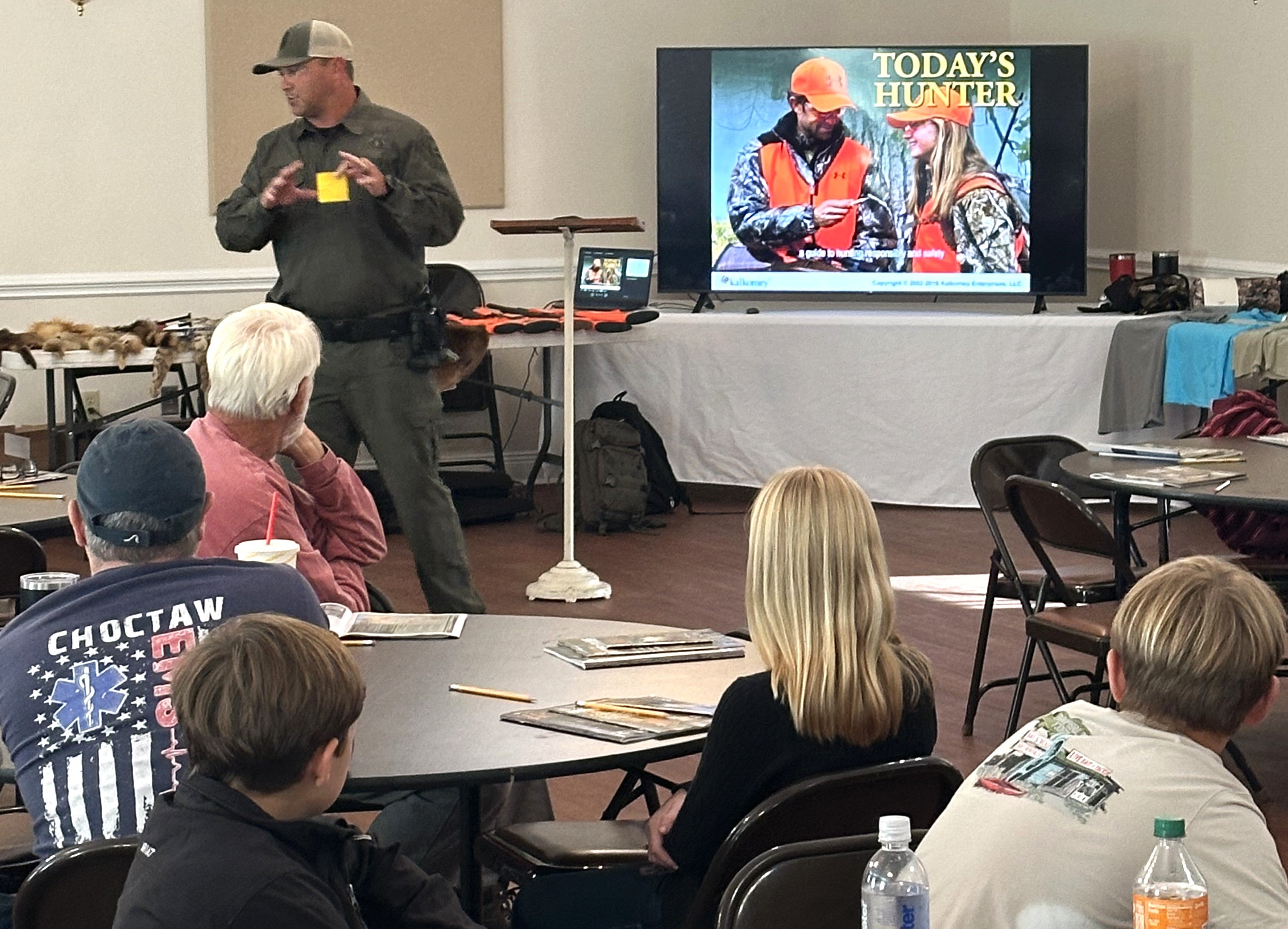
WFF's Hunter Education classes can provide critical safety training to everyone no matter the age. Photo by Katie Burks

The two firearms-related fatalities during the 2025-2026 season were due to a lack of muzzle discipline.

Always follow the 10 Commandments of Firearm Safety.

  1. Treat every firearm as if it is loaded.
  2. Control the muzzle of your firearm. Keep the barrel pointed in a safe direction. Never point a firearm at anything that you do not wish to shoot and insist that your shooting and hunting companions do the same.
  3. Be sure of your target and beyond. Positively identify your target before you fire, and make sure no people, livestock, roads or buildings are beyond the target.
  4. Never shoot at water or a hard, flat surface. A ricocheting bullet cannot be controlled.
  5. Don’t use a scope for target identification; use binoculars.
  6. Never climb a tree, cross a fence or jump a ditch with a loaded firearm.
  7. Store guns and ammunition separately. Store firearms under lock and key and use a gun case to transport firearms.
  8. Make sure your barrel and action are clear of all obstructions.
  9. Unload firearms when not in use. Never take someone else’s word that a firearm is unloaded. Check yourself.
  10. Avoid drugs and alcohol when hunting or shooting. Even some over-the-counter medicines can cause impairment.

As always, hunters are urged to follow the 11 guidelines for using a treestand safely.

  1. Always wear a safety harness, also known as a fall-arrest system, when you are in a treestand, as well as when climbing into or out of a treestand. Statistics show that the majority of treestand incidents occur while climbing in and out of a stand.
  2. A safety strap should be attached to the tree to prevent you from falling more than 12 inches.
  3. Always inspect the safety harness for signs of wear or damage before each use.
  4. Follow all manufacturers' instructions for use of a safety harness and stand.
  5. Follow the three-point rule of treestand safety. Always have three points of contact to the steps or ladder before moving. This could be two arms and one leg holding and stepping on the ladder or one arm and two legs in contact with the ladder before moving. Be cautious that rain, frost, ice or snow can cause steps to become extremely slippery. Check the security of the step before placing your weight on it.
  6. Always hunt with a plan and, if possible, a buddy. Before you leave home, let others know your exact hunting location, when you plan to return and who is with you.
  7. Always carry emergency signal devices such as a cell phone, walkie-talkie, whistle, signal flare, PLD (personal locator device) and flashlight at all times and within reach even while you are suspended in your fall-arrest system. Watch for changing weather conditions. In the event of an incident, remain calm and seek help immediately.
  8. Always select the proper tree for use with your treestand. Select a live, straight tree that fits within the size limits recommended in your treestand's instructions. Do not climb or place a treestand against a leaning tree.
  9. Never leave a treestand installed for more than two weeks since damage could result from changing weather conditions and/or from other factors not obvious with a visual inspection.
  10. Always use a haul line to pull up your gear and unloaded firearm or bow to your treestand once you have reached your desired hunting height. Never climb with anything in your hands or on your back. Prior to descending, lower your equipment on the opposite side of the tree.

Always know your physical limitations. Don't take chances.

Grider said significant progress has been made to make it much easier for Alabama hunters to get the safety instruction needed before the season begins.

“We have done lot to improve accessibility to hunter education classes in person and online,” he said. “We’re doing classes all around the state. We’re doing some of those in partnership with Bass Pro Shops and Cabela’s. We also have done a lot of work with vendors for a good, quality online experience. Those online classes range from free to $50, and people can find whichever platform meets their needs.”

Grider reiterated: “If you wear a fall-arrest system (safety harness), stay attached to the tree from the time you leave the ground until you get back to the ground and keep that muzzle pointed in a safe direction at all times, we will never read your name on one of our accident reports.”

###

firearms

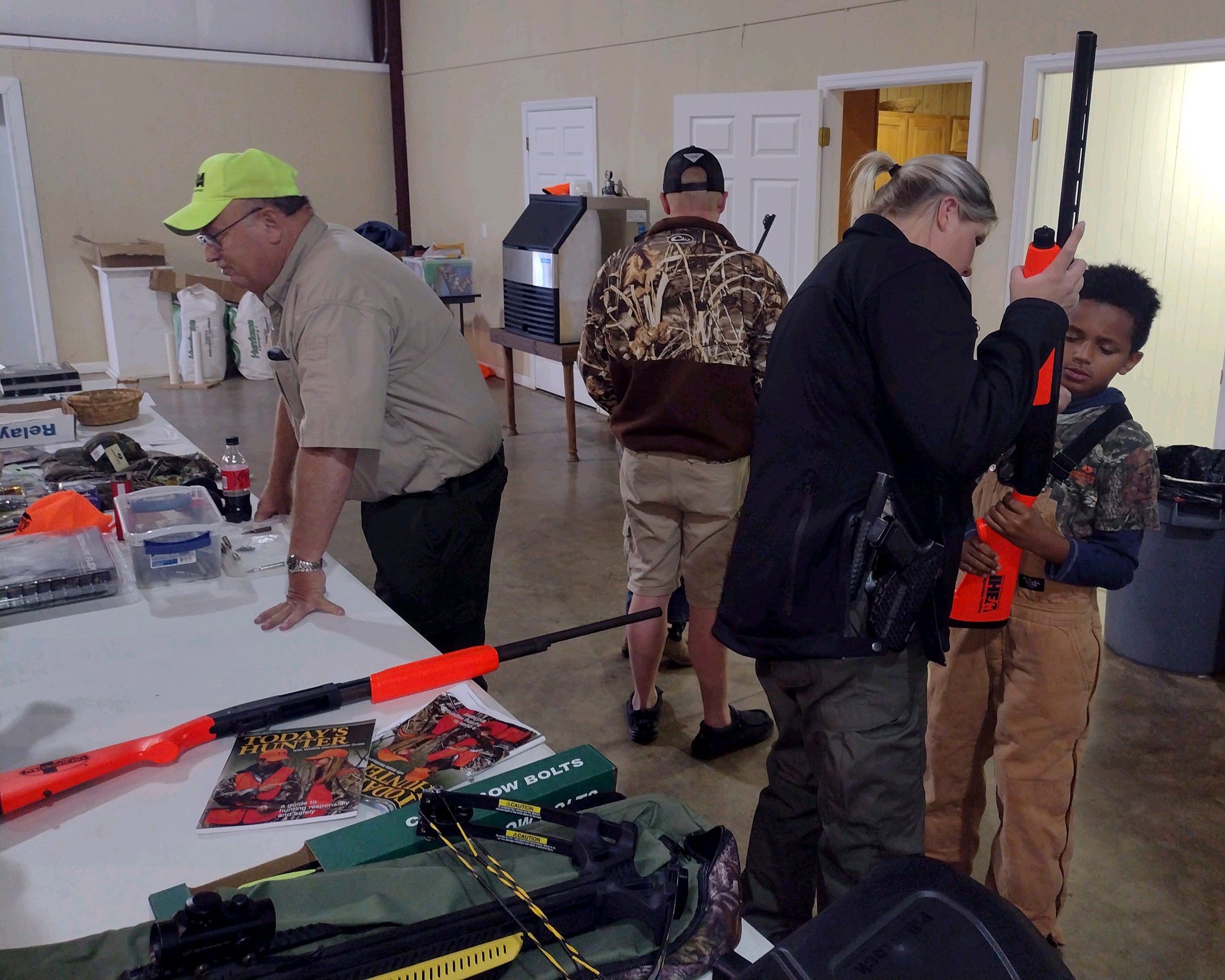
WFF's Katie Burks explain the features of different firearms used for hunting to a young hunter. WFF photo

Written by

David Rainer
Outdoor Writer
Back To News